Publié le 2 octobre 2026
DJI Dock 4 and Matrice 5TD

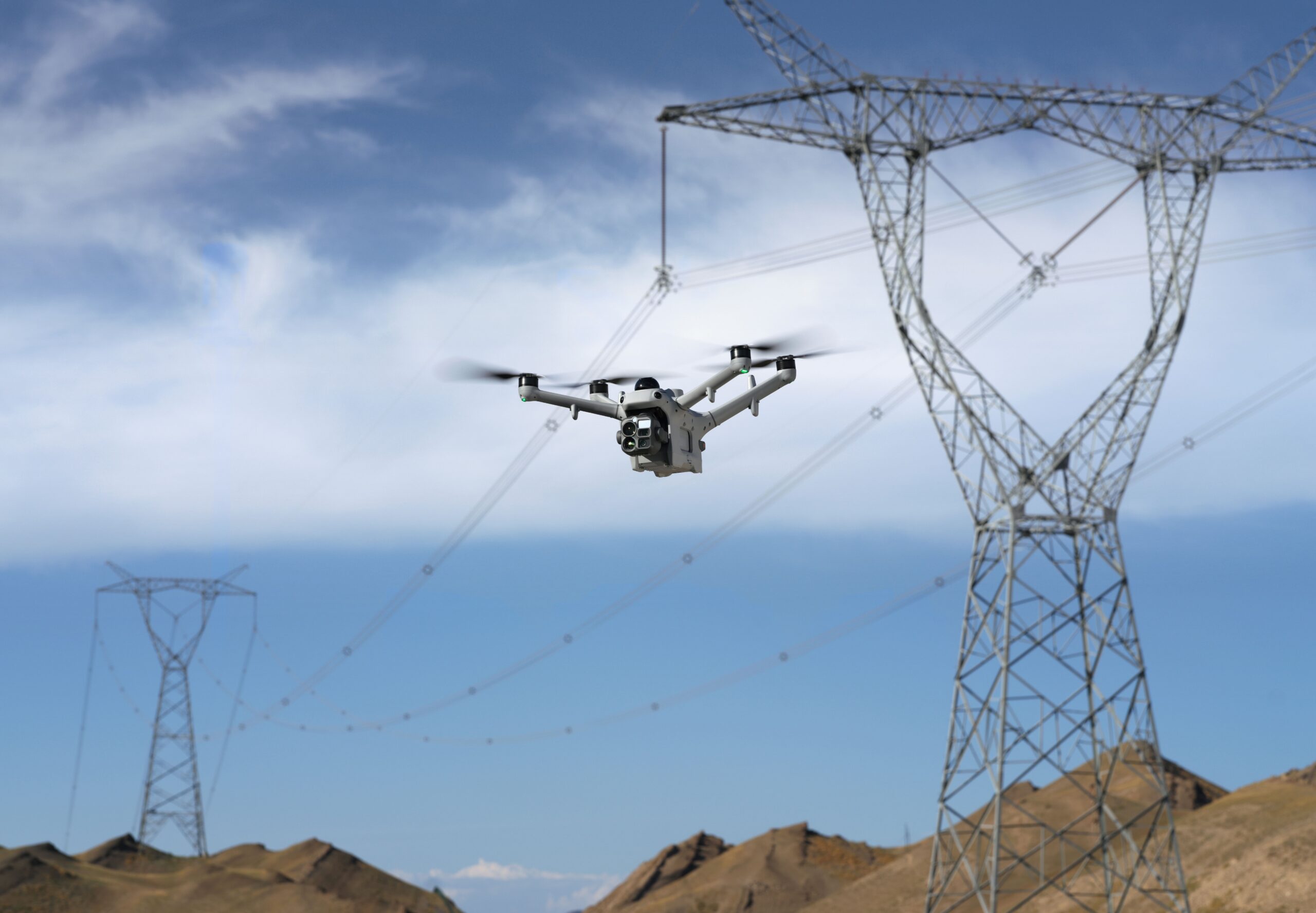
On October 14, 2026, DJI unveiled the DJI Dock 4 and the DJI Matrice 5TD drone. According to DJI, the Dock 4 is the brand’s first docking station to automatically replace the drone’s battery in under 25 seconds, rather than recharging it on site. Paired with the Matrice 5TD, which offers up to 59 minutes of flight time, integrated LiDAR and radar systems, and AI-powered detection of 17 object types, it is designed for on-call missions and continuous surveillance. This article explores what has changed compared with the Dock 3 and Matrice 4TD, with two comparison tables.
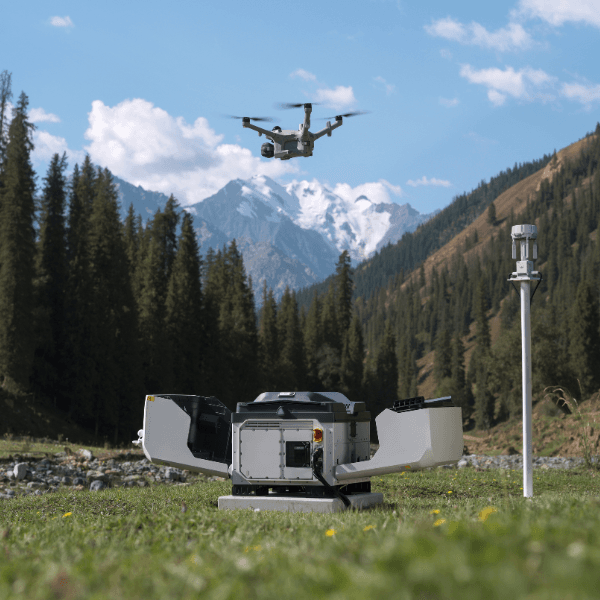
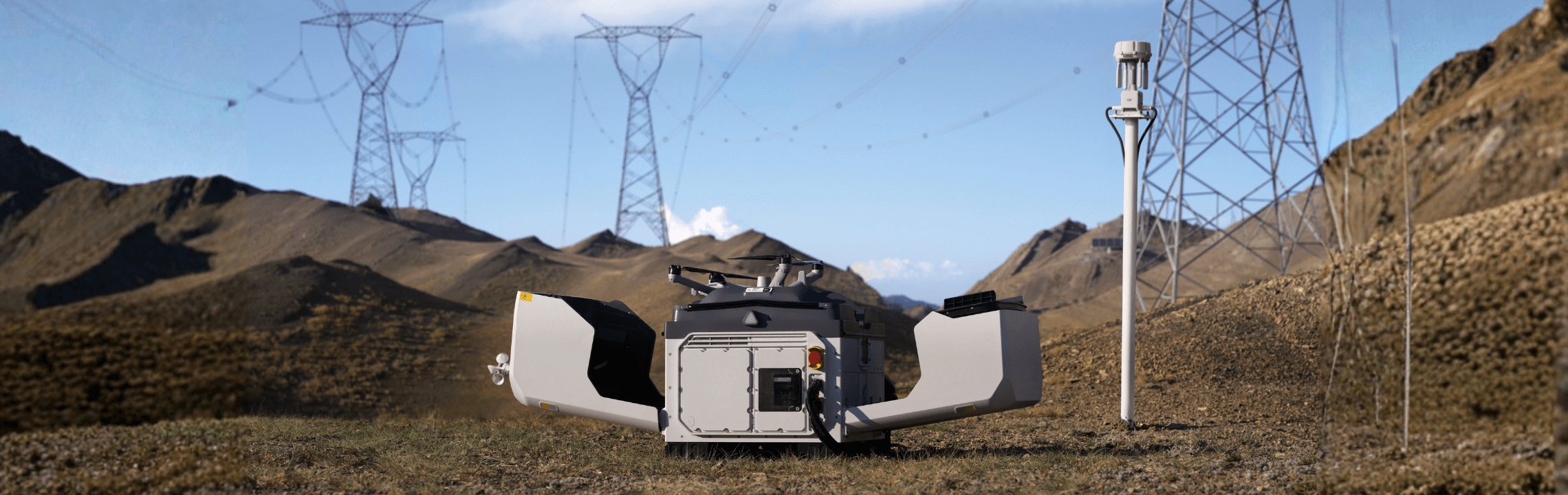
A drone dock is an outdoor station that houses the aircraft, recharges it, and deploys it remotely without requiring a pilot on site. Until now, DJI docks have recharged the battery while the drone was docked. The Dock 4 changes this approach.
The Dock 3 keeps the drone grounded for 27 minutes to charge the battery from 15% to 95%. The Dock 4 removes the depleted battery and installs one that is already charged. DJI states that the battery swap takes less than 25 seconds, with less than 45 seconds between landing and the next takeoff. These figures were measured under controlled conditions and are provided for reference only.
The dock has four compartments and can store up to three batteries, which are recharged simultaneously across two charging channels (27 minutes per battery to charge from 15% to 95%). For public-sector and industrial buyers, the key benefit is availability: the drone can perform successive flights during extended operations or prolonged surveillance missions.
The Dock 4 operates in temperatures ranging from −40°C to 50°C (compared with −30°C for the Dock 3) and at altitudes of up to 5,000 m (4,500 m for the Dock 3). Its IP56 protection rating remains unchanged. The trade-off is a weight of 66 kg without batteries (55 kg for the Dock 3) and a maximum input power of 2,000 W (800 W for the Dock 3). In the event of a mains power failure, the drone batteries stored in the dock provide approximately 4.5 hours of backup power per battery.
The Dock 4 relies on a dedicated ground station, the DJI O4 Ground Station. It provides O4 Enterprise transmission, RTK positioning, Ethernet (PoE) connectivity or 4G access via the DJI Cellular Dongle 2 (sold separately), and supports ONVIF IP cameras (up to four 1080p streams). DJI presents it as a solution for complex sites, as it can be installed remotely from the dock.
Important consideration for Europe: the advertised 40 km transmission range is based on the IC standard. Under the CE standard, the range is 12 km, the same as for the Dock 3, in open terrain without interference.
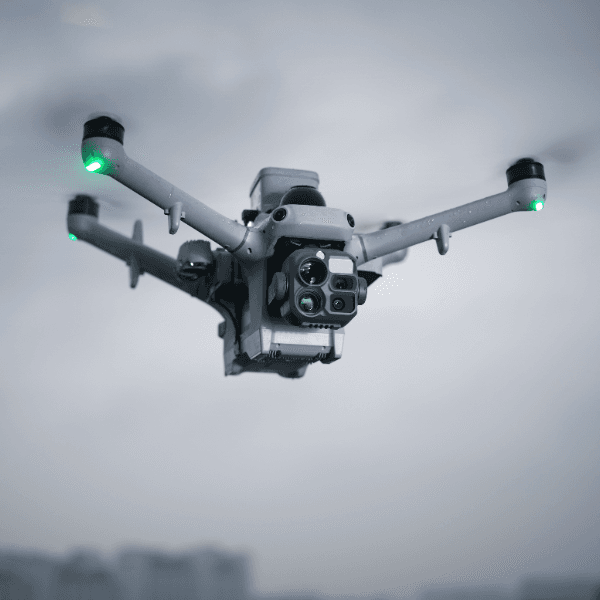
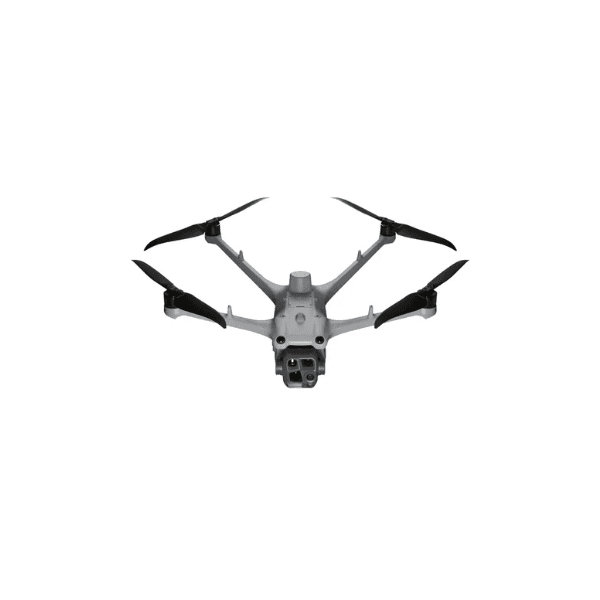
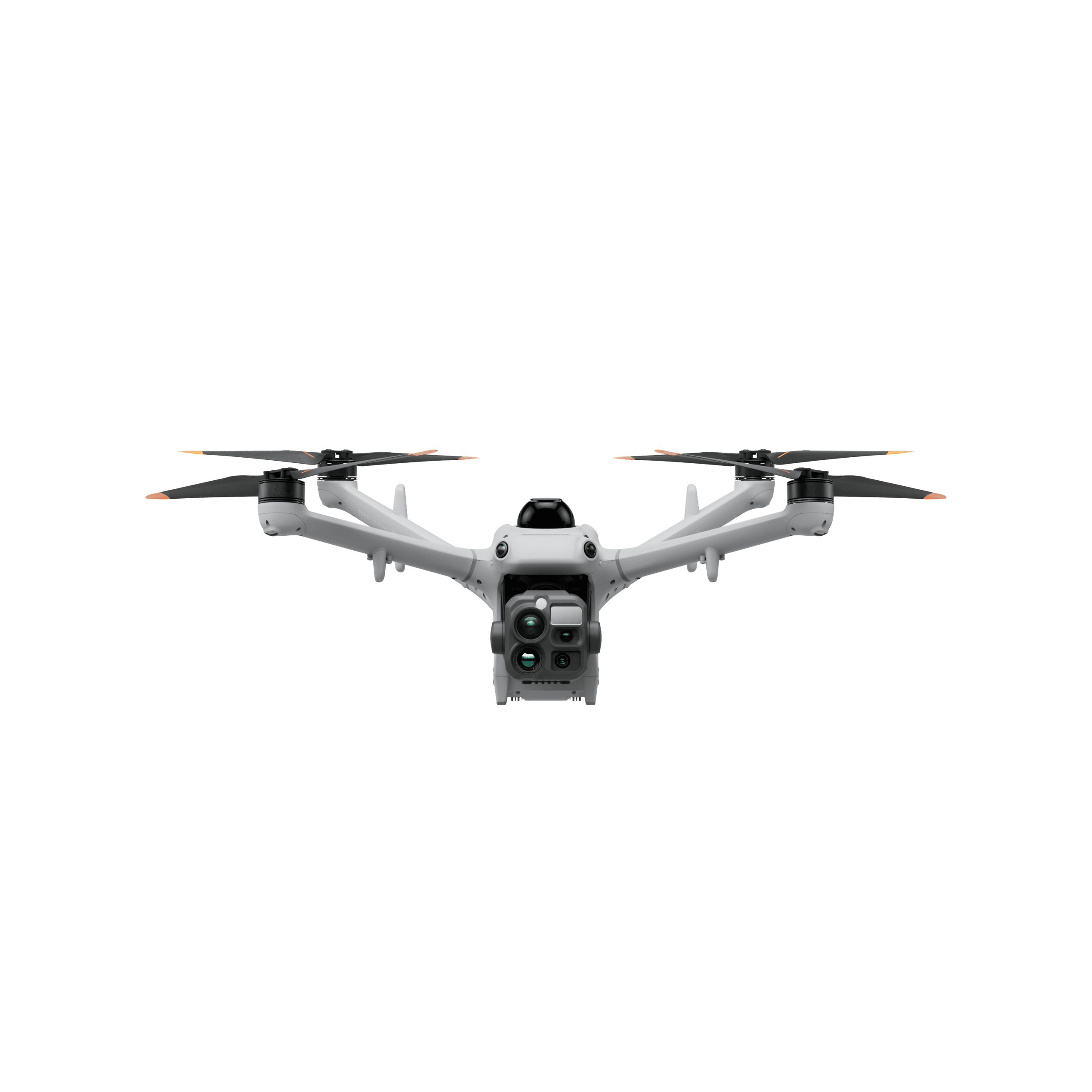
The Matrice 5TD weighs 2,600 g (3,050 g at maximum takeoff weight), compared with 1,850 g for the Matrice 4TD. Its 260 Wh battery delivers up to 59 minutes of flight time and a maximum flight distance of 53 km, as measured in laboratory conditions. It can withstand winds of up to 12 m/s, and DJI highlights its automatic return function in the event of excessive wind.
Three mounting points (two on the sides and one on top) support up to 450 g of accessories, including the AL2D spotlight, AS2D speaker (30 W, 120.5 dB at 1 m), and AP1 parachute. DJI specifies that a flight termination system is a key technical requirement for C6 compliance. The regulatory requirements applicable to your operations should be checked on our drone regulations page.
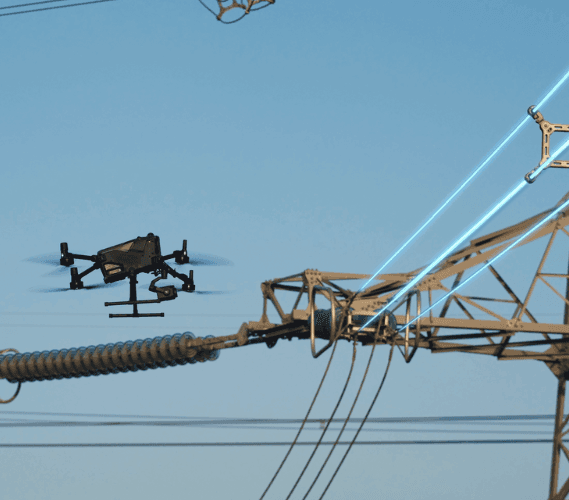
The Matrice 5TD combines omnidirectional binocular vision, 360° rotating LiDAR, and millimeter-wave radar facing forward, upward, and downward. The forward-facing radar can detect a 12 mm rubber cable at a distance of 40 m. For the Matrice 4TD, the Dock 3 specifications list a LiDAR and radar module as an accessory.
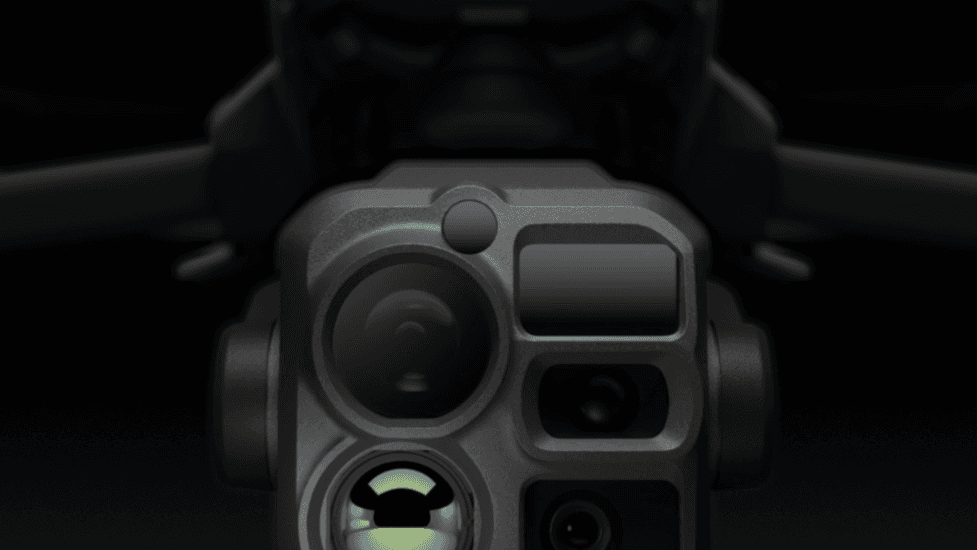
The drone features three 50 MP cameras (wide-angle, medium telephoto, and telephoto with a 252 mm equivalent focal length) and a 1280 × 1024 thermal camera, compared with the Matrice 4TD’s 640 × 512 resolution in standard mode. Its laser rangefinder has a range of up to 3,000 m (1,800 m on the 4TD). Flying Eye also highlights its full-color night vision capability.
The Matrice 5TD detects 17 types of objects in real time, including vehicles, boats, and animals. The Virtual Cockpit allows operators to search for an object using text or an image. After the mission, DJI FlightHub 2 compares the collected data with historical aerial photographs or 3D models, annotates discrepancies, and exports a report.
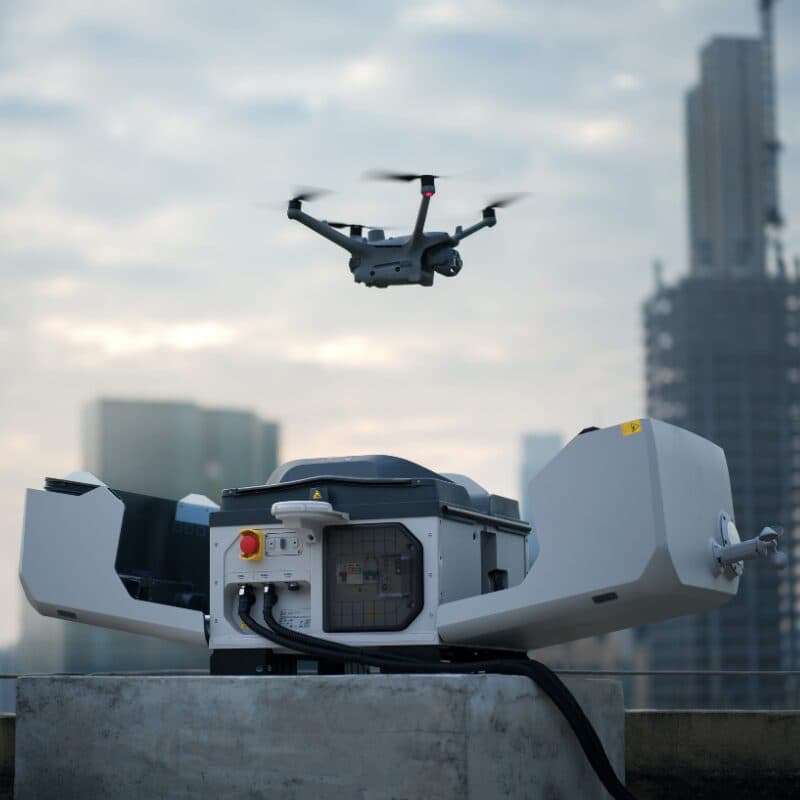
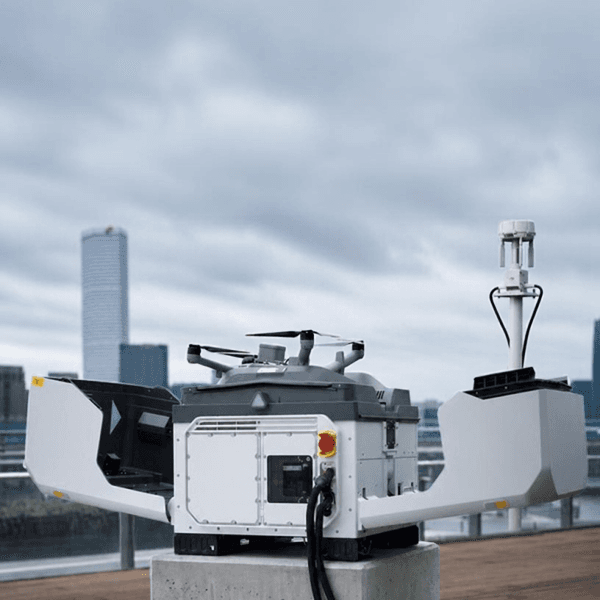
The Dock 4 is the right choice when drone downtime comes at a high cost, such as for on-call operations, extended surveillance, consecutive flights, or missions in cold or high-altitude environments. However, it requires the Matrice 5TD, meaning a new aircraft and a new ground station. The Dock 3 remains a suitable option for existing Matrice 4TD or 4D fleets, or when vehicle mounting is required.
These requirements are particularly relevant to public safety, firefighting, search and rescue, and infrastructure inspection. Our teams can help you compare the two options based on your mission requirements.
The DJI Dock 4 with Matrice 5TD is available to order from Flying Eye, with pricing on request. The first year of DJI Care Enterprise Plus is included free of charge for both the dock and the drone. As DJI’s leading French partner and an ISO 9001-certified company, Flying Eye provides end-to-end project support, from needs assessment and remote pilot training to after-sales service and repairs at its dedicated repair center.
Contact: +33 9 72 62 78 50 · info@flyingeye.fr
The Dock 3 recharges the drone’s battery while it is docked (27 minutes to charge from 15% to 95%). The Dock 4 replaces it with a fully charged battery in less than 25 seconds, allowing the drone to take off again in under 45 seconds, according to DJI, under controlled test conditions.
DJI pairs the Dock 4 with the Matrice 5TD, and its specifications do not mention any other aircraft. For existing Matrice 4TD or 4D fleets, the Dock 3 remains the solution documented by the manufacturer.
DJI specifies a maximum flight time of up to 59 minutes, measured in laboratory conditions without a payload and at a constant speed of 15 m/s. Actual flight time depends on payload weight, wind, and temperature.
DJI specifies a range of 40 km (IC standard), 25 km (SRRC standard), and 12 km (CE standard) in open terrain without interference. In Europe, the reference range is therefore 12 km, the same as for the Dock 3.
The DJI Dock 4 with Matrice 5TD is available to order from Flying Eye, with pricing on request. The first year of DJI Care Enterprise Plus is included free of charge for both the dock and the drone. Contact us for a tailored quote based on your mission requirements.